Bunions and Other Common Foot Issues

Bunions, along with other common foot issues, can significantly impact daily life. Symptoms of bunions include a bony bump at the base of the big toe, redness, swelling, and pain, which worsens with pressure from shoes. Corns and calluses may also develop due to friction. Treatment options vary based on severity. Mild cases may benefit from changes in footwear, padding, or orthotic inserts to alleviate pressure. Stretching exercises and ice packs can help manage pain and inflammation. In more severe cases, surgical correction may be necessary to realign the toe joint and relieve discomfort. It's important to address foot issues promptly to prevent them from worsening. Visiting a podiatrist ensures an accurate diagnosis and personalized treatment plan. Whether it is bunions, corns, or any other foot concern, it is suggested that you make an appointment with a podiatrist to get professional advice and treatment.

If you are suffering from bunions, contact Adriana Strimbu, DPM of Complete Foot & Ankle Care. Our doctor can provide the care you need to keep you pain-free and on your feet.

What Is a Bunion?

A bunion is formed of swollen tissue or an enlargement of boney growth, usually located at the base joint of the toe that connects to the foot. The swelling occurs due to the bones in the big toe shifting inward, which impacts the other toes of the foot. This causes the area around the base of the big toe to become inflamed and painful.

Why Do Bunions Form?

Genetics – Susceptibility to bunions are often hereditary

Stress on the feet – Poorly fitted and uncomfortable footwear that places stress on feet, such as heels, can worsen existing bunions

How Are Bunions Diagnosed?

Doctors often perform two tests – blood tests and x-rays – when trying to diagnose bunions, especially in the early stages of development. Blood tests help determine if the foot pain is being caused by something else, such as arthritis, while x-rays provide a clear picture of your bone structure to your doctor.

How Are Bunions Treated?

  • Refrain from wearing heels or similar shoes that cause discomfort
  • Select wider shoes that can provide more comfort and reduce pain
  • Anti-inflammatory and pain management drugs
  • Orthotics or foot inserts
  • Surgery

If you have any questions, please feel free to contact our office located in Hallandale Beach, FL . We offer the newest diagnostic and treatment technologies for all your foot care needs.

Read more about Bunions

Recovery From a Jones Fracture

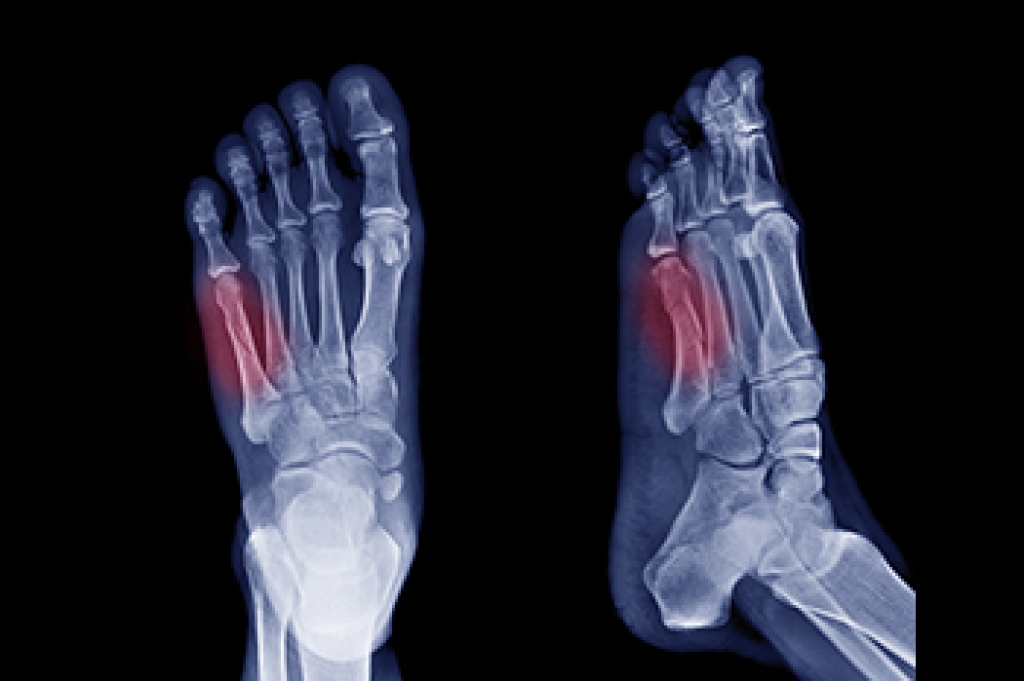
Recovery from a Jones fracture, which is a break in the pinky toe, or 5th metatarsal, involves a structured treatment plan under the guidance of a podiatrist. This type of fracture commonly results from a forceful impact, such as landing awkwardly from a jump or repetitive stress from running. Symptoms typically include pain, swelling, and bruising on the outside of the foot, in addition to difficulty bearing weight. Upon diagnosis, which usually involves having an X-ray taken, the initial treatment focuses on realigning the bone and immobilizing the foot with a cast. In severe cases, surgery might be necessary, and a period of non-weight-bearing will follow. This usually involves using crutches or a walker, and, after six to eight weeks, the cast is removed. At that point specific exercises to restore range of motion and strengthen the muscles surrounding your foot and ankle are prescribed. As healing progresses, the podiatrist will likely introduce balance and functional exercises to help you return to normal activities. If you are experiencing toe pain, it is suggested that you schedule an appointment with a podiatrist for an exam, diagnosis, and treatment options. 


Broken toes may cause a lot of pain and should be treated as soon as possible. If you have any concerns about your feet, contact Adriana Strimbu, DPM from Complete Foot & Ankle Care. Our doctor will treat your foot and ankle needs.

What Is a Broken Toe?

A broken toe occurs when one or more of the toe bones of the foot are broken after an injury. Injuries such as stubbing your toe or dropping a heavy object on it may cause a toe fracture.

Symptoms of a Broken Toe

  • Swelling
  • Pain (with/without wearing shoes)
  • Stiffness
  • Nail Injury

Although the injured toe should be monitored daily, it is especially important to have a podiatrist look at your toe if you have severe symptoms. Some of these symptoms include worsening or new pain that is not relieved with medication, sores, redness, or open wounds near the toe.

If you have any questions please feel free to contact our office located in Hallandale Beach, FL . We offer the newest diagnostic tools and technology to treat your foot and ankle needs.

Read more about What to Know About a Broken Toe

Anatomical Facts About Tarsal Tunnel Syndrome

Tarsal tunnel syndrome is a condition caused by the compression of the posterior tibial nerve as it travels through the tarsal tunnel, a narrow space inside the ankle. This tunnel is formed by bone and a dense band of tissue called the flexor retinaculum. The posterior tibial nerve, along with arteries, veins, and tendons, passes through this confined space, providing sensation to the bottom of the foot and motor function to the muscles. When the nerve is compressed, it can cause pain, numbness, and tingling in the foot and ankle. Factors contributing to this condition include inflammation, injury, or structural issues such as flat feet. Tarsal tunnel syndrome can cause pain and discomfort. If you have this condition, it is suggested that you visit a podiatrist who can effectively treat this ailment.

Tarsal tunnel syndrome can be very uncomfortable to live with. If you are experiencing tarsal tunnel syndrome, contact Adriana Strimbu, DPM of Complete Foot & Ankle Care. Our doctor can provide the care you need to keep you pain-free and on your feet.

Tarsal Tunnel Syndrome

Tarsal tunnel syndrome, which can also be called tibial nerve dysfunction, is an uncommon condition of misfiring peripheral nerves in the foot. The tibial nerve is the peripheral nerve in the leg responsible for sensation and movement of the foot and calf muscles. In tarsal tunnel syndrome, the tibial nerve is damaged, causing problems with movement and feeling in the foot of the affected leg.

Common Cause of Tarsal Tunnel Syndrome

  • Involves pressure or an injury, direct pressure on the tibial nerve for an extended period of time, sometimes caused by other body structures close by or near the knee.
  • Diseases that damage nerves, including diabetes, may cause tarsal tunnel syndrome.
  • At times, tarsal tunnel syndrome can appear without an obvious cause in some cases.

The Effects of Tarsal Tunnel Syndrome

  • Different sensations, an afflicted person may experience pain, tingling, burning or other unusual sensations in the foot of the affected leg.
  • The foot muscles, toes and ankle become weaker, and curling your toes or flexing your foot can become difficult.
  • If condition worsens, infections and ulcers may develop on the foot that is experiencing the syndrome.

A physical exam of the leg can help identify the presence of tarsal tunnel syndrome. Medical tests, such as a nerve biopsy, are also used to diagnose the condition. Patients may receive physical therapy and prescriptive medication. In extreme cases, some may require surgery.

If you have any questions please contact our office located in Hallandale Beach, FL . We offer the newest diagnostic and treatment technologies for all your foot and ankle needs.

Read more about Treating Tarsal Tunnel Syndrome

Diabetes and Foot Wound Healing

Diabetes significantly impacts wound healing, particularly in the feet, due to high blood sugar levels that impair circulation and immune response. Diabetes is a chronic condition where the body cannot regulate blood sugar properly, leading to various complications. In diabetics, poor blood circulation reduces the delivery of oxygen and nutrients essential for healing, while neuropathy, or nerve damage, diminishes the sensation, making it harder to notice injuries. As a result, even minor foot wounds can progress to serious ulcers or infections if left untreated. Foot wounds in diabetic patients often occur due to friction, pressure, or minor trauma, exacerbated by poorly fitting shoes or neglect. To prevent and treat these wounds, maintain proper foot hygiene, inspect feet daily for injuries, and manage blood sugar levels rigorously. Wearing well-fitted shoes and avoiding walking barefoot can also help prevent injuries. If you have diabetes and have persistent wounds or complications, it is strongly suggested that you consult a podiatrist. These healthcare providers specialize in diabetic foot care, providing tailored treatment and preventing severe outcomes.

Diabetic foot care is important in preventing foot ailments such as ulcers. If you are suffering from diabetes or have any other concerns about your feet, contact Adriana Strimbu, DPM from Complete Foot & Ankle Care. Our doctor can provide the care you need to keep you pain-free and on your feet.

Diabetic Foot Care

Diabetes affects millions of people every year. The condition can damage blood vessels in many parts of the body, especially the feet. Because of this, taking care of your feet is essential if you have diabetes, and having a podiatrist help monitor your foot health is highly recommended.

The Importance of Caring for Your Feet

  • Routinely inspect your feet for bruises or sores.
  • Wear socks that fit your feet comfortably.
  • Wear comfortable shoes that provide adequate support.

Patients with diabetes should have their doctor monitor their blood levels, as blood sugar levels play such a huge role in diabetic care. Monitoring these levels on a regular basis is highly advised.

It is always best to inform your healthcare professional of any concerns you may have regarding your feet, especially for diabetic patients. Early treatment and routine foot examinations are keys to maintaining proper health, especially because severe complications can arise if proper treatment is not applied.

If you have any questions, please feel free to contact our office located in Hallandale Beach, FL . We offer the newest diagnostic and treatment technologies for all your foot care needs.

Read more about Diabetic Foot Care

Schedule your foot and ankle podiatry appointment now!

Please feel free to call us at (954) 455-9404 with any questions you have or to schedule an appointment for your foot or ankle problems. You can also make an appointment online now by clicking here. We hope you'll find our foot doctor practice in Hallandale Beach, FL offers the accessibility and personal commitment you look for from a podiatric physician.

Our podiatry practice operates from a single location at 404 North Federal Highway, Hallandale Beach, FL 33009.

We proudly serve patients from Hallandale Beach and the surrounding areas, including Miami-Dade and Broward counties, with cities such as Hallandale Beach, Hollywood, Fort Lauderdale, Aventura, North Miami, Miami, Miami Beach, Miami Lakes, Sunny Isles BeachCoral Gables, Surfside, Bal Harbour, Plantation, Cooper City, Weston.

Connect With Us

scroll-to-top