Treatment for Broken Ankles

Broken ankles, also known as ankle fractures, can vary from minor hairline fractures to severe, multiple fractures. They occur when one or more of the bones that make up the ankle joint are broken. The type of fracture often determines the treatment needed. Simple fractures may need immobilization with a cast or splint to ensure proper alignment during healing. More complex fractures, particularly those where the bones are out of place or the ankle joint is unstable, may require surgery. The surgical intervention aims to realign the bones and secure them in place with screws, plates, or pins. During post-surgery, the ankle is generally immobilized, and weight-bearing may be restricted for a certain period. If you have broken your ankle, it is strongly suggested that you make an appointment with a podiatrist for a proper diagnosis and prompt treatment to reduce the risk of complications.

Broken ankles need immediate treatment. If you are seeking treatment, contact Adriana Strimbu, DPM from Complete Foot & Ankle Care. Our doctor can provide the care you need to keep you pain-free and on your feet. 

Broken Ankles
A broken ankle is experienced when a person fractures their tibia or fibula in the lower leg and ankle area. Both of these bones are attached at the bottom of the leg and combine to form what we know to be our ankle.

When a physician is referring to a break of the ankle, he or she is usually referring to a break in the area where the tibia and fibula are joined to create our ankle joint. Ankles are more prone to fractures because the ankle is an area that suffers a lot of pressure and stress. There are some obvious signs when a person experiences a fractured ankle, and the following symptoms may be present.

Symptoms of a Fractured Ankle

  • Excessive pain when the area is touched or when any pressure is placed on the ankle
  • Swelling around the area
  • Bruising of the area
  • Area appears to be deformed

If you suspect an ankle fracture, it is recommended to seek treatment as soon as possible. The sooner you have your podiatrist diagnose the fracture, the quicker you’ll be on the way towards recovery.

If you have any questions, please feel free to contact our office located in Hallandale Beach, FL . We offer the newest diagnostic and treatment technologies for all your foot care needs.

Read more about All About Broken Ankle

Do You Suffer From Painful Feet?

Painful deformities, such as hammertoes, can be treated. Stop living with foot pain, and have beautiful feet again!

Definition and Risk Factors for Cracked Heels

Cracked heels, also known as heel fissures, are a common foot condition characterized by dry, thickened skin with visible splits or cracks on the heels. These cracks can be superficial and painless, but in severe cases, they may deepen, bleed, or become painful, making walking and standing uncomfortable. Several factors contribute to the development of cracked heels, and some individuals are more susceptible than others. Dry skin, often due to inadequate moisturization or natural skin type, is a primary cause. The skin on the soles of the feet is naturally thicker and can become dehydrated, leading to cracking. Prolonged standing or walking, especially in ill-fitting shoes, can put excessive pressure on the feet and increase the risk. Additionally, underlying health conditions such as diabetes, thyroid disorders, and psoriasis can make an individual more prone to heel fissures. Effective prevention and treatment for cracked heels include regular moisturizing, wearing comfortable, well-fitting shoes, using foot supports, and addressing any underlying health concerns. If you have cracked heels, it is suggested that you make an appointment with a podiatrist who can prescribe effective medication for relief and recovery.

If the skin on your feet starts to crack, you may want to see a podiatrist to find treatment. If you have any concerns, contact Adriana Strimbu, DPM from Complete Foot & Ankle Care. Our doctor can provide the care you need to keep you pain-free and on your feet.

Cracked Heels

It is important to moisturize your cracked heels in order to prevent pain, bleeding, and infection. The reason cracked heels form is because the skin on the foot is too dry to support the immense pressure placed on them. When the foot expands, the dry skin on the foot begins to split.

Ways to Help Heal Them

  • Invest in a good foot cream
  • Try Using Petroleum Jelly
  • Ease up on Soaps
  • Drink Plenty of Water

Ways to Prevent Cracked Heels

  • Moisturize After Showering
  • Skip a Shower
  • Keep Shower Water Lukewarm
  • Don’t Scrub Your Feet

If you are unsure how to proceed in treating cracked heels, seek guidance from a podiatrist. Your doctor will help you with any questions or information you may need. 

If you have any questions, please feel free to contact our office located in Hallandale Beach, FL . We offer the newest diagnostic and treatment technologies for all your foot care needs.
Read more about Solutions for Cracked Heels

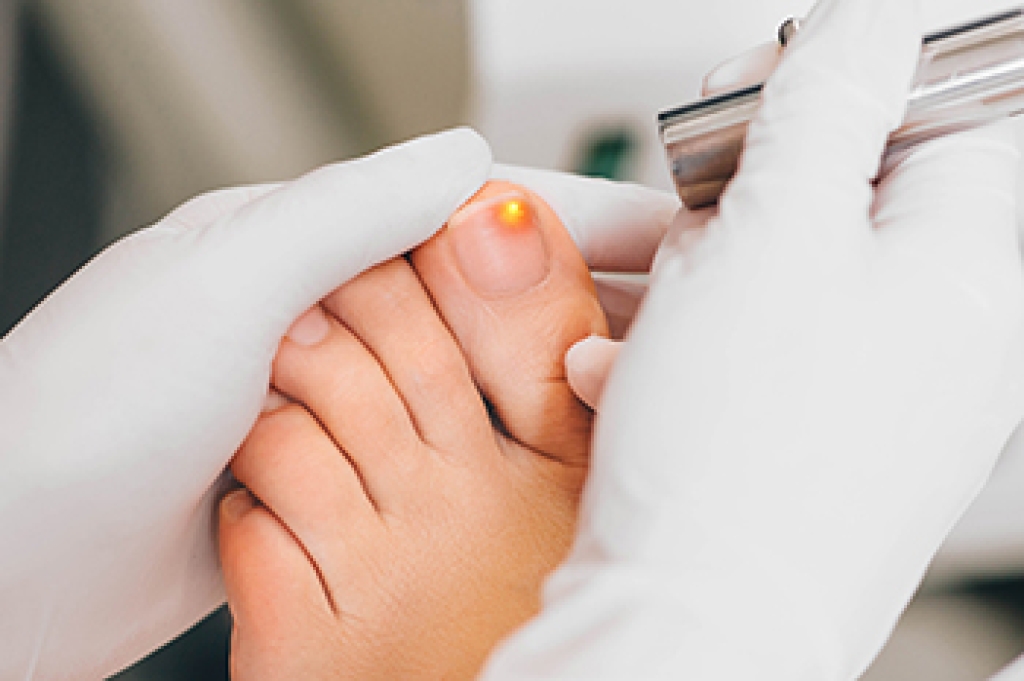
Laser Therapy and Toenail Fungus

Toenail fungus, or onychomycosis, can be stubborn and challenging to treat with traditional methods. However, recent advancements in medical technology have introduced an effective alternative, which is known as laser therapy. This innovative approach utilizes concentrated beams of light to target and eliminate the fungus residing beneath the toenail. The laser treatment process begins with the application of the laser, which penetrates the nail. This specifically targets the fungal infection while leaving the surrounding healthy tissue unharmed. The laser generates heat, effectively eradicating the fungal cells and inhibiting their ability to regrow. Laser treatment offers several advantages. It is non-invasive, requires no anesthesia, and typically involves minimal discomfort. Additionally, it can be extremely effective, often requiring fewer sessions than traditional treatments. Patients can generally resume their daily activities immediately following the procedure. As with any medical treatment, consultation with a podiatrist is crucial in determining what the best approach is for your specific condition. Laser therapy represents a promising option in the battle against stubborn toenail fungus, offering a safe, efficient, and minimally disruptive solution to restore healthy and clear nails. If you are afflicted with toenail fungus, it is suggested that you seek the counsel of a podiatrist who can determine if laser treatment is right for you.

Laser treatment can be an effective way to get rid of toenail fungus. If you have any questions about laser treatment, consult with Adriana Strimbu, DPM from Complete Foot & Ankle Care. Our doctor will assess your condition and provide you with quality treatment for fungal nails.

What Are Toenail Fungal Infections?

Onychomycosis, or fungal infection of the nail, is a relatively common and non-serious condition. Around 10 percent of U.S. citizens are afflicted with fungal nails. Common forms of fungus that infect the nail include dermatophytes, yeasts, and molds.

Symptoms of Toenail Fungal Infections Include:

  • Nail thickening
  • Brittleness of the nail
  • Discoloration of the nail

Diagnosis for Fungal Nails

Fungal infections are diagnosed by fungal culture and microscopy. This will rule out any other conditions such as nail trauma, psoriasis, lichen planus, and onychogryphosis.

What Is Laser Treatment?

Laser treatment is a non-invasive, safe, quick, and painless procedure that uses the heat from a laser to kill fungus in the nail. Each infected nail is targeted with a laser for several minutes. The treatment is usually utilized several different times over a select period. During this time, a podiatrist will keep an eye on the infection.

If you have any questions, please feel free to contact our office located in Hallandale Beach, FL . We offer the newest diagnostic and treatment technologies for all your foot care needs.

Read more about Laser Treatment for Fungal Nails

Signs You May Need New Running Shoes

Runners know the importance of a good pair of shoes that help to clock in the miles comfortably and safely. But like any other piece of equipment, running shoes have a lifespan. If you are wondering whether it is time to bid farewell to your old shoes, here are some signs to look out for. First, pay attention to the wear and tear on the soles. If the treads are worn down, especially in specific areas, this can lead to reduced traction and increased risk of slipping or injury. Second, listen to your body. If you are experiencing unexplained pain in your feet, ankles, or knees, worn-out shoes could be the cause. They may no longer provide the necessary support and cushioning, which causes stress on your joints. Running shoes typically have a life span of 300 to 500 miles, depending on various factors. If you have surpassed this range, it is time to shop for a new pair. If you need guidance in the life span and safety of your running shoes, it is suggested that you make an appointment with a podiatrist for an evaluation.  

Exercising your feet regularly with the proper foot wear is a great way to prevent injuries. If you have any concerns about your feet, contact Adriana Strimbu, DPM of Complete Foot & Ankle Care. Our doctor will treat your foot and ankle needs.

How to Prevent Running Injuries

Many common running injuries are caused by overuse and overtraining. When the back of the kneecap starts wearing out and starts causing pain in your knee, this is commonly referred to as runner’s knee. Runner’s knee is a decrease in strength in your quadriceps and can occur if you’re not wearing properly fitted or supporting shoes. To prevent runner’s knee, focusing on hip strengthening is a good idea, as well as strengthening your quads to keep the kneecaps aligned.

What Are Some Causes of Running Injuries? 
- One cause of a common running injury is called iliotibial band syndrome.
- Plantar fasciitis is also another common injury.
- Stress fractures can occur from overtraining, lack of calcium, or even your running style.

Best Ways to Prevent Running Injuries
- Wear footwear that fits properly and suits your running needs.
- Running shoes are the only protective gear that runners have to safeguard them from injury.
- Make a training schedule. Adding strengthening exercises as well as regular stretching can help keep you strong and limber and can lessen the possibility of injuries.
- Stretching keeps muscles limber; this will help you gain better flexibility.

If you have any questions, please feel free to contact our office located in Hallandale Beach, FL . We offer the newest diagnostic and treatment technologies for all your foot care needs.

Read more about Preventing Running Injuries

Schedule your foot and ankle podiatry appointment now!

Please feel free to call us at (954) 455-9404 with any questions you have or to schedule an appointment for your foot or ankle problems. You can also make an appointment online now by clicking here. We hope you'll find our foot doctor practice in Hallandale Beach, FL offers the accessibility and personal commitment you look for from a podiatric physician.

Our podiatry practice operates from a single location at 404 North Federal Highway, Hallandale Beach, FL 33009.

We proudly serve patients from Hallandale Beach and the surrounding areas, including Miami-Dade and Broward counties, with cities such as Hallandale Beach, Hollywood, Fort Lauderdale, Aventura, North Miami, Miami, Miami Beach, Miami Lakes, Sunny Isles BeachCoral Gables, Surfside, Bal Harbour, Plantation, Cooper City, Weston.

Connect With Us

scroll-to-top